 What We Actually Do When We Show Up for a Service Call
A straight look at what our techs check on a Brick service call, built around homes from 1938-2005 and the coastal-cold swings that wear doors out fast here.
Off-Track Doors: What's Really Happening in Brick Homes
Brick homes built between 1938 and 2005 carry original track hardware that wasn't made for decades of coastal cold. Here's what actually knocks a door off track.
Local detail
What Is Going On
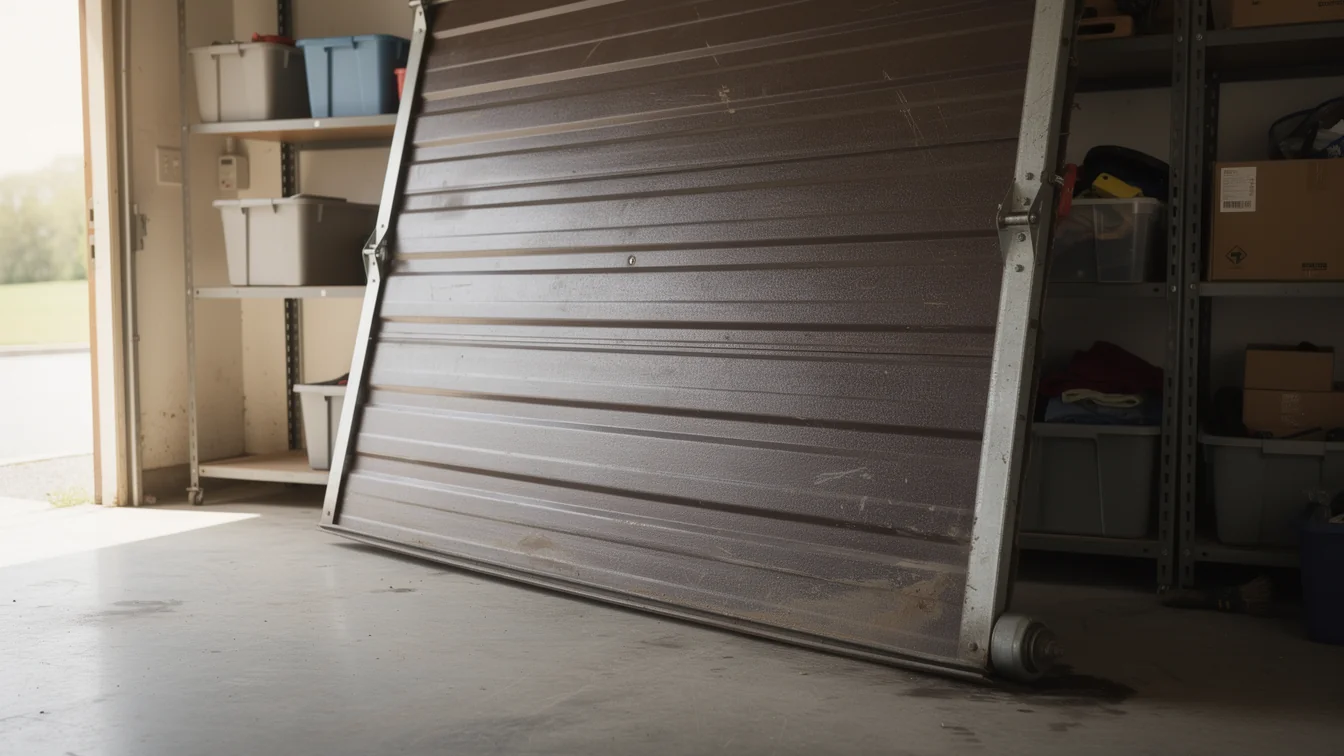
A garage door comes off track when the rollers stop riding inside the steel channel that guides them up and down. In Brick, most of that channel is original to houses built between 1938 and 2005, with the bulk of the stock going up through the 1960s and 70s. Track brackets from that era were fastened with lighter hardware than what gets installed today, and after fifty-plus years of expansion and contraction, the bolts holding the track to the jamb work loose a little at a time. You don't notice until the door binds on one side, a cable slips, or someone backs into the bottom panel and bends the track just enough that the rollers jump the rail. On a lot of these older setups the track was also never perfectly plumb to begin with, which means it's been running slightly out of alignment the whole time and finally reaches the point where it gives up. This isn't a defect unique to one house. It's the ordinary wear pattern you get from this specific generation of garage construction once it hits its fifth or sixth decade.
The area
When to Get Help
Call before you touch anything if the door is hanging crooked, if you can see daylight between the roller and the track, or if a cable has come off the drum - any of those means the door is under spring tension and can drop without warning. If the opener is still trying to pull a door that's off track, the motor gear strips fast, and that turns a track repair into a track-plus-opener repair. Given how much of Brick's housing sits in that 1938-2005 window, a lot of the doors we see with this problem haven't had the track hardware touched since it was first bolted in. If your house falls in that older part of the build range and the door has started making a grinding or popping sound before coming off track, that's worth a call before it fails completely, not after.
What we find
Checking It Yourself
You can safely check a few things with the door closed and the opener disconnected. Look at the horizontal track sections above the door and press on each bracket where it meets the wall - if it moves, that's loosened hardware, a common finding on the 1960s and 70s-era framing that makes up most of Brick's housing. Check that both vertical tracks are the same distance from the car at the floor; if one side is noticeably wider, the track has shifted. Look at the rollers themselves - cracked or worn plastic rollers on original hardware let the door wander side to side even when the track is straight. What you shouldn't do is try to bend a track back into place or force rollers back into the channel while the door is under spring tension. That's the point where this stops being a homeowner job.
How we work
What Local Conditions Do
Brick sits in a cold-severe climate band, and that matters for track alignment more than people expect. Steel track contracts in cold and expands in heat, and a house built decades ago with original hardware has been through that cycle every winter and summer since. The fasteners loosen a fraction more each season, and a track that was square in 1968 can be out of true today without ever taking a direct hit. Garages that aren't heated or insulated - common in the older sections of town - see a wider swing between the overnight low and the afternoon sun hitting a south-facing door, which is exactly the kind of repeated flexing that walks a bracket loose over time. It's slow and it's quiet, which is why most people don't catch it until the door is already riding wrong.
Questions
Common questions
Is an off-track door always a spring problem too?
Not always, but they're related often enough that we check both. A door that's come off track has usually put extra strain on the cables and spring during the process, so even if the spring looks fine, it's worth a look before you run the opener again.
My house is from the 1960s - is that why this keeps happening?
It's a factor. A lot of Brick's housing dates to that era, and the track hardware installed then wasn't built with today's fasteners or bracket spacing. Decades of seasonal temperature swings loosen that original hardware gradually, which is a common reason older doors drift off track more than once.
Can I just push the door back onto the track myself?
Only if the door is fully down and disconnected from the opener, with no tension on the cables. If a cable or spring is involved, forcing the door back can snap something under load. When in doubt, leave it and call.
Recommendation
You Might Also Like
More garage door guides for Brick homeowners.
What We Actually Do When We Show Up for a Service Call
A straight look at what our techs check on a Brick service call, built around homes from 1938-2005 and the coastal-cold swings that wear doors out fast here.
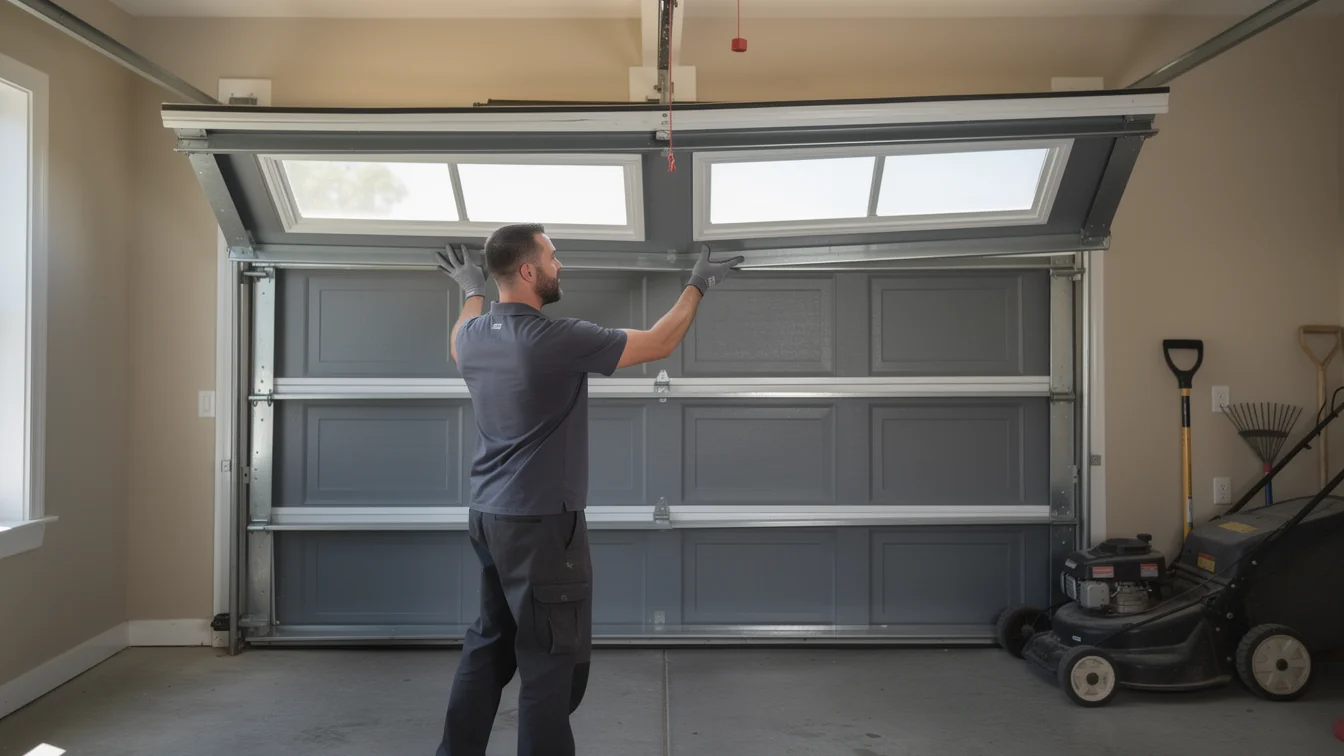 What a Technician Checks First in a Brick, NJ Garage
In Brick, NJ homes built between 1938 and 2005, a technician checks springs, tracks, and opener wiring first - here's what that inspection actually involves.
 When a Spring Goes in Cold Weather in Brick
Brick homes built mostly in the 1960s and 70s carry torsion springs now past their rated cycles.
Ready when you are
Need a garage door sorted in Brick?
Brick Garage Door Pros repairs and installs garage doors, springs and openers in Brick, NJ and the surrounding area.