 Attached vs Detached Garage Doors: What Brick Homeowners Deal With
How Brick's 1938-2005 housing stock and cold-severe climate change what goes wrong with attached and detached garage doors, and what to check before you call.
Weather Seals and Draughts in Brick Garage Doors
Brick's housing stock dates mostly to the 1960s and 70s, and the cold-climate band here means worn weather seals turn into real drafts. Here's what to check and when to call.
Local detail
What Is Going On
Most of the garage doors we look at in Brick sit on houses built between 1938 and 2005, with the median landing around 1968 and the bulk of the stock dating to the 1960s and 70s. That matters because the bottom seal and side weatherstripping on a door that age were never designed to last fifty-plus years. The rubber or vinyl gets brittle, the track it sits in warps a little from decades of expansion and contraction, and the gap under the door grows wider than anyone notices until a cold snap makes it obvious.
Brick sits in a climate band classed as cold and severe, which means the temperature swings that stress a garage door's seals aren't rare events - they're a normal winter here. A door that seals fine in October can let in a steady draft by January once the cold has worked on brittle rubber and a slightly racked track. The draught itself isn't usually the opener or the springs failing. It's almost always the seal, the weatherstrip channel, or a door that's sagged just enough to open a gap along one side.
The area
When to Get Help
Call someone when the draft is uneven - cold air coming in strong on one side of the door but not the other. That usually points to a bent track or a door that's racked out of square, not just worn weatherstripping, and that's not a seal-replacement job anymore. If you've already replaced the bottom seal and the gap is back within a season, the track or the slab itself has shifted, which is common on doors from the 1960s-70s stock that have been through decades of New Jersey winters.
Also call if the draft comes with the door binding, grinding, or needing a shove partway through its cycle. On a house with original or near-original hardware, a seal that's failed is often one symptom among several, and patching just the rubber ignores the track wear or hinge wear that caused the gap in the first place. We'd rather tell you it's a seal job over the phone than have you pay for a truck roll to fix fifteen dollars of weatherstrip.
What we find
Checking It Yourself
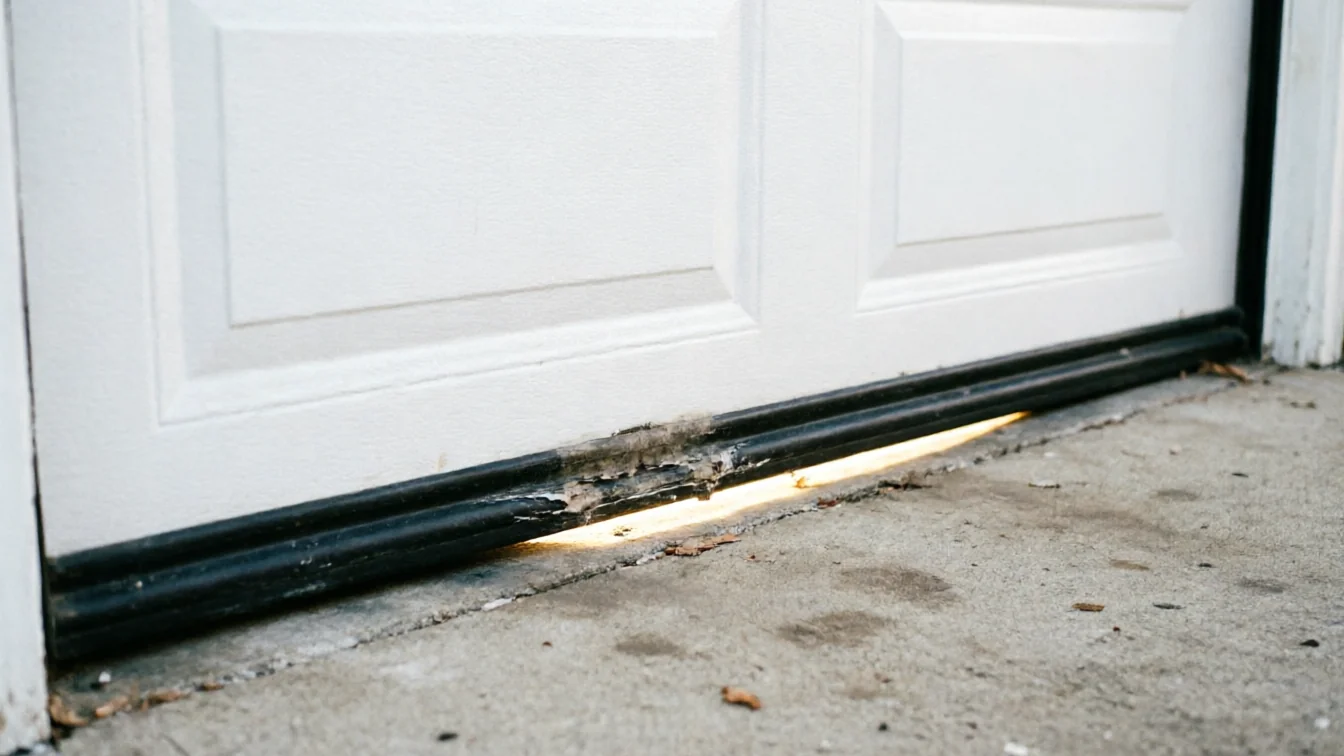
Close the door at night and look for daylight - or streetlight - along the bottom edge and both sides. On a flat concrete floor, a consistent thin line is normal; a line that's wide on one side and tight on the other means the door isn't sitting square, not just that the seal is worn.
Run a hand along the bottom seal. If it's stiff, cracked, or flattened on one side instead of still domed, it's done its job and is past replacing on schedule, not early. Given how much of Brick's housing dates to the 1960s and 70s, a lot of these seals are well past their service life even if nobody's touched them.
Check the side weatherstrip the same way - press it against the frame and see if it springs back or stays flat. A flat strip won't block a draft no matter how tight the door closes. This is a five-minute check and doesn't require tools, just a flashlight and the willingness to kneel on a cold garage floor.
How we work
What Local Conditions Do
In a cold-severe climate like Brick's, a failed seal isn't just a comfort issue - it's a freeze-thaw cycle playing out at your garage floor every winter. Moist air gets in, settles, and on the coldest nights that gap is where heat leaves a garage that shares a wall with the house.
With median household income in the service area around $101,754, most owners we talk to would rather spend on a seal replacement now than let a draft run up heating costs for another three winters. That's a reasonable call - the parts are inexpensive relative to almost anything else on the door.
Where it gets more expensive is when the draught has been ignored long enough that moisture has worked into the bottom panel on an older steel door, which is common on the 1960s-70s stock still running original slabs. At that point you're not sealing a draft, you're replacing a panel, and that's a different conversation. We'll always tell you which one you're actually dealing with before we quote anything.
Questions
Common questions
Why does my garage door draft get worse every winter in Brick?
Weatherstripping is a wear part, and in a cold-severe climate like ours it degrades faster from repeated freeze-thaw cycles. A seal that worked fine two winters ago can crack or flatten enough by this winter to let a steady draft through, especially on doors original to houses built in the 1960s-70s.
Is a draft always a sign I need a new door?
No. Most drafts in Brick trace back to a worn bottom seal or side weatherstrip, both cheap fixes. It's only a bigger job if the track has racked the door out of square or moisture has already gotten into an original steel panel - we check both before recommending anything beyond the seal.
How old is too old for the original weatherstripping?
If your house dates to the 1960s or 70s, which covers a lot of Brick, the weatherstripping has likely outlived its intended service life regardless of appearance. Rubber loses flexibility over decades even without visible cracking, so age alone is a reason to check it.
Recommendation
You Might Also Like
More garage door guides for Brick homeowners.
Attached vs Detached Garage Doors: What Brick Homeowners Deal With
How Brick's 1938-2005 housing stock and cold-severe climate change what goes wrong with attached and detached garage doors, and what to check before you call.
 What Brick's Older Housing Stock Means for Your Garage Door
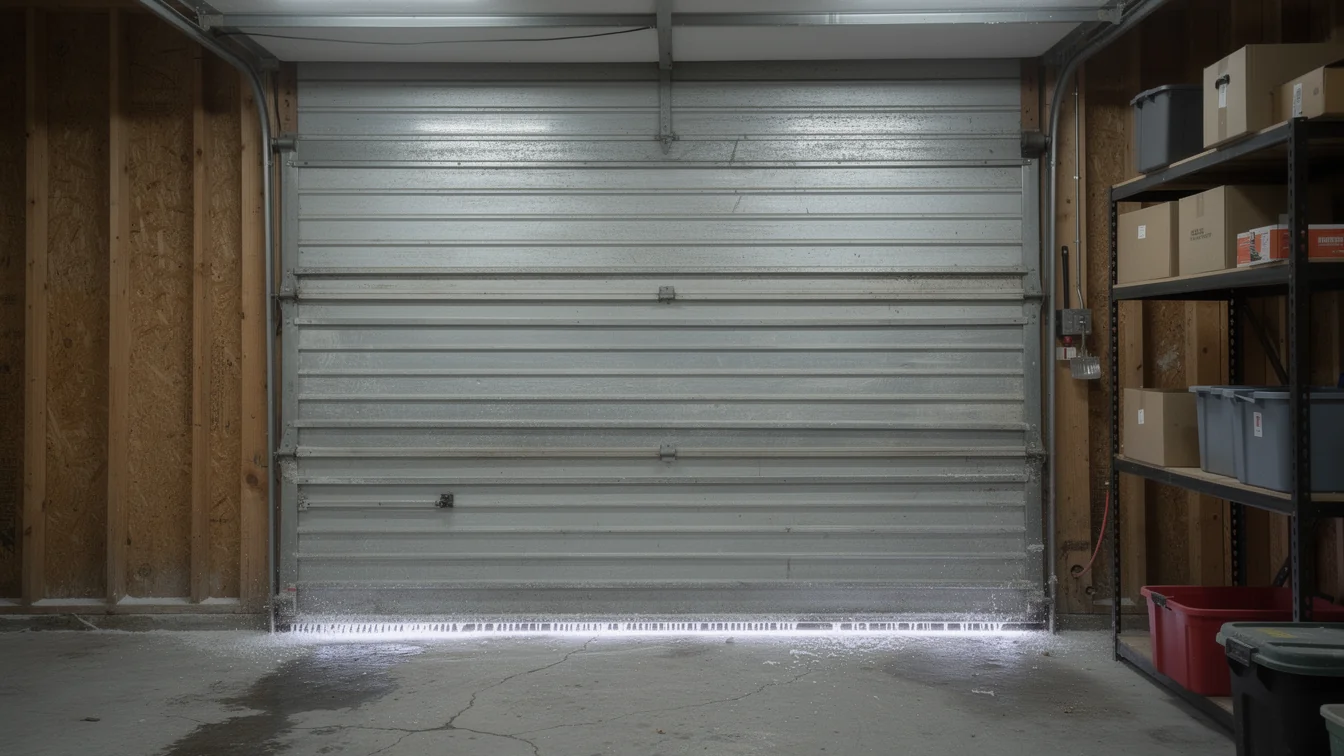
Most Brick, NJ garage doors date to homes built 1938-2005, many with no insulation for this area's severe cold winters.
 What That Noise From Your Garage Door Is Actually Telling You
Brick homeowners with 1960s-70s houses hear specific noises from cold-weather hardware fatigue.
Ready when you are
Need a garage door sorted in Brick?
Brick Garage Door Pros repairs and installs garage doors, springs and openers in Brick, NJ and the surrounding area.