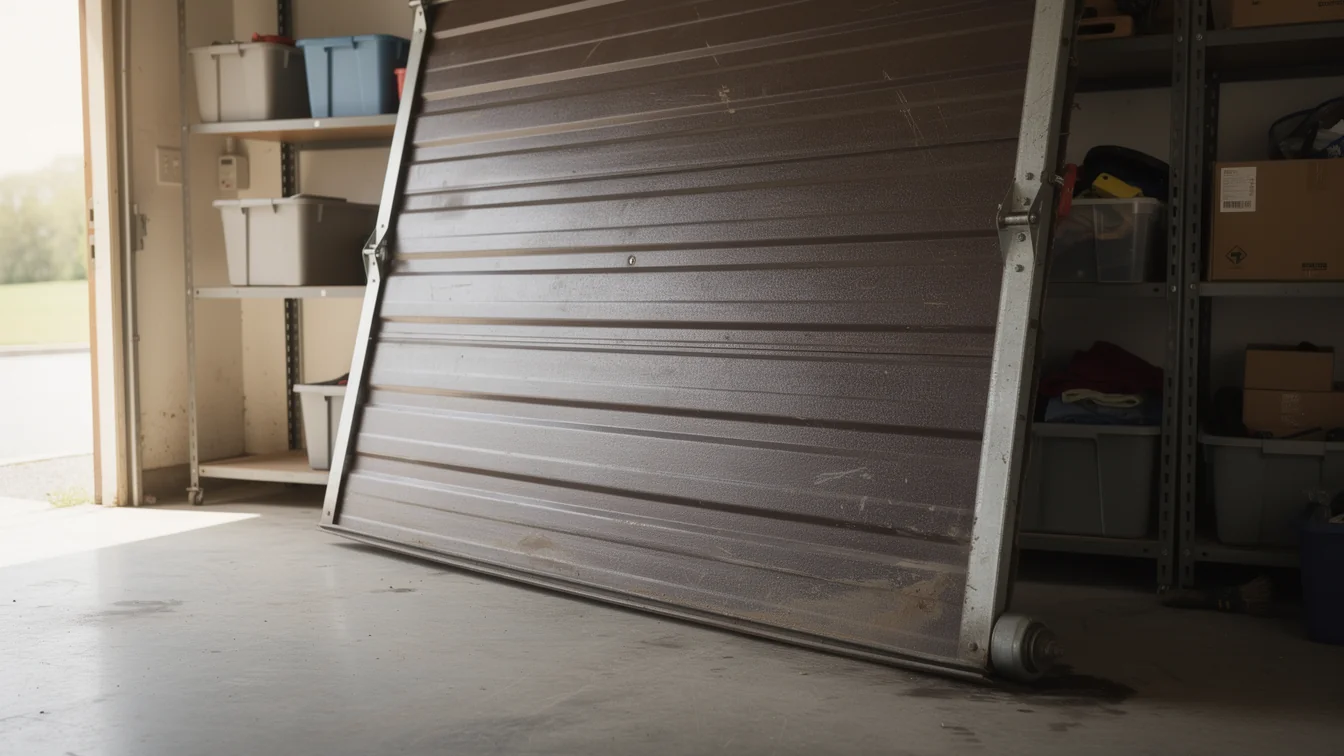
 Off-Track Doors: What's Really Happening in Brick Homes
Brick homes built between 1938 and 2005 carry original track hardware that wasn't made for decades of coastal cold.
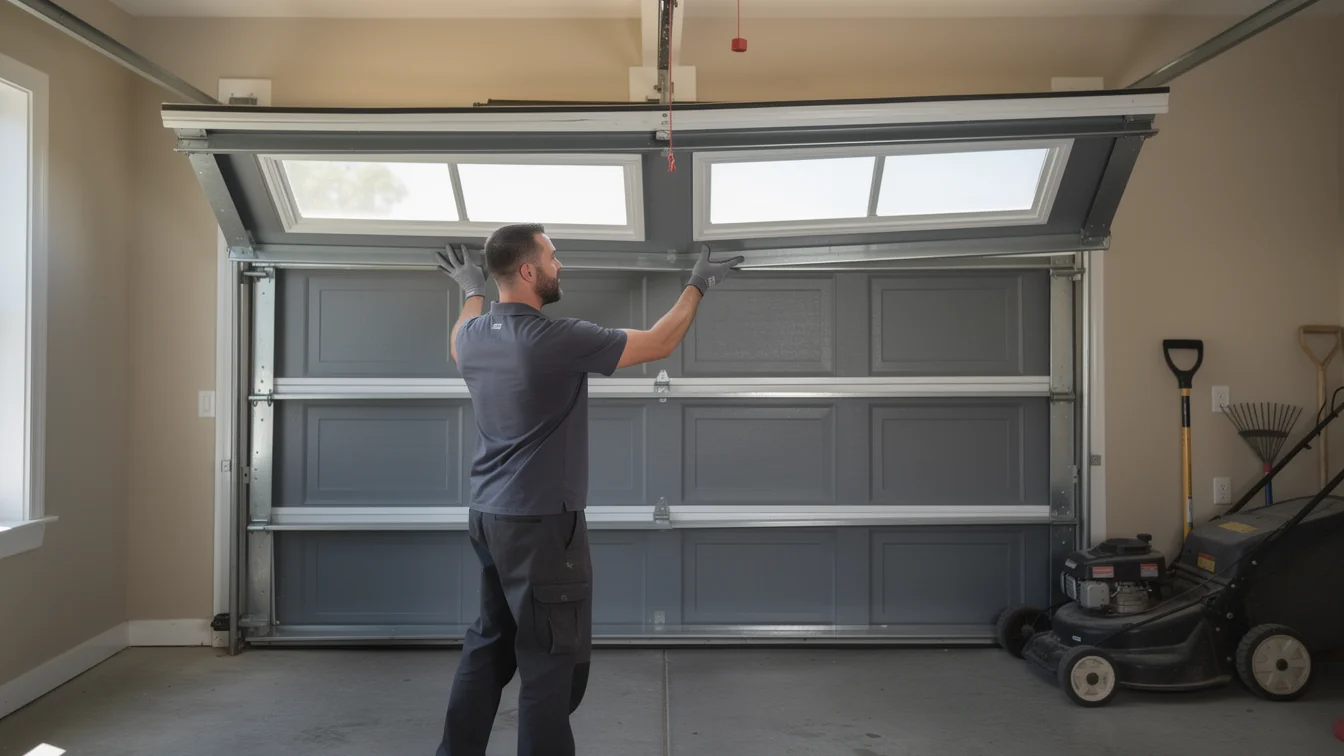
What a Technician Checks First in a Brick, NJ Garage
In Brick, NJ homes built between 1938 and 2005, a technician checks springs, tracks, and opener wiring first - here's what that inspection actually involves.
Local detail
What Is Going On
Most of the calls we take in Brick trace back to the same thing: the door is doing what it's always done, but the hardware underneath it has quietly aged out. Housing in this service area went up mostly between 1938 and 2005, with the typical build year sitting around 1968. A door installed when a house was built, or even the first replacement after that, is carrying torsion springs and rollers that were never meant to last sixty years of cycling.
Across the roughly 50 named sections that make up Brick and the surrounding area, the bulk of the stock dates to the 1960s and 70s. That matters because torsion springs are rated in cycles, not years, and a spring installed in 1971 has almost certainly opened and closed more times than its rating allows, whether or not it's ever failed yet. A technician who walks up to a door in this town starts by asking how old the house is, not how old the opener is, because the house age tells us more about what's hiding behind the bottom bracket.
The area
When to Get Help
Call before the door comes off its track, not after. A spring that's visibly separated - you'll see a clean gap in the coil - means the door should not be opened by hand or by the opener until it's replaced. Cables that look frayed at the bottom roller, especially on a door that's been painted over more than once, are carrying tension they were never built to hold for this long.
If the opener strains, reverses partway, or makes a grinding sound right at the top of travel, that's usually a spring losing its lift, not a motor problem - pushing through it with a stronger opener just moves the failure point. On a door old enough to match the 1960s-70s stock common in this area, a stuck or slow-closing door is often the spring telling you it's done, not a track alignment issue. We don't recommend DIY spring replacement on a torsion system under tension; that's the one repair that puts people in the ER.
What we find
Checking It Yourself
Disconnect the opener and lift the door by hand, slowly, about halfway. It should stay put on its own. If it drops or shoots up, the springs are no longer balanced and the door is working harder than it should, which is often the first real warning sign on an older install. Run your hand along the track looking for rust pitting or bent sections - on houses from the 1960s and 70s stock common across this area, galvanized track that's never been serviced can corrode from the inside out even when the outside looks fine.
Check the bottom brackets and hinges for metal fatigue cracks, not just rust. Listen to the opener motor under load; a straining hum on lift means the springs are compensating for wear, not the motor doing its job. None of this replaces a hands-on inspection - a visual check tells you something is wrong, not how close it is to failing. If the door is original to a house built before the 1970s, we'd rather look at it in person than talk you through a fix over the phone.
How we work
What Local Conditions Do
Brick sits in a cold-severe climate band, and that changes what a technician checks first here versus a town with milder winters. Grease that's fine at 50 degrees stiffens hard below freezing, and steel springs lose some temper strength in sustained cold, which is why winter is when marginal springs finally let go. We check lubricant condition and spring temper before anything else once the temperature drops.
There's a second factor specific to this stretch of the Jersey Shore: with Point Pleasant Beach and Manasquan both within six miles, and Spring Lake and Belmar not much farther, the salt-carrying air off the ocean reaches inland tracks and hinges faster than it would further from the coast. That combination - cold-cycling steel plus salt air on galvanized hardware - is harder on a garage door system than either factor alone. At a median household income of $101,754 across the service area, most owners here choose a full spring and hardware replacement over patching corroded parts, since a patch job on salt-affected steel rarely holds through a second winter.
Questions
Common questions
How do I know if my garage door spring is original to the house?
If the house was built before the late 1990s and nobody has a receipt for a spring replacement, assume it's either original or close to it. Given that most homes in this area date to the 1960s and 70s, a spring that old is well past any reasonable cycle rating even if it hasn't failed yet.
Why does my door act up more in winter?
Cold stiffens lubricant and reduces the temper strength of spring steel, so a spring that's marginal in October often fails in January. Brick's winters fall in the cold-severe band, which is why a pre-winter check of lubrication and spring condition catches more problems than a summer inspection does.
Is it the salt air or the cold that's harder on my door?
Both, together. Being a few miles from the shore means galvanized track and hinges corrode faster than inland installs, and that corrosion weakens metal that's already under more stress from cold-weather cycling. Neither factor alone usually causes failure; the combination does.
Recommendation
You Might Also Like
More garage door guides for Brick homeowners.
Off-Track Doors: What's Really Happening in Brick Homes
Brick homes built between 1938 and 2005 carry original track hardware that wasn't made for decades of coastal cold.
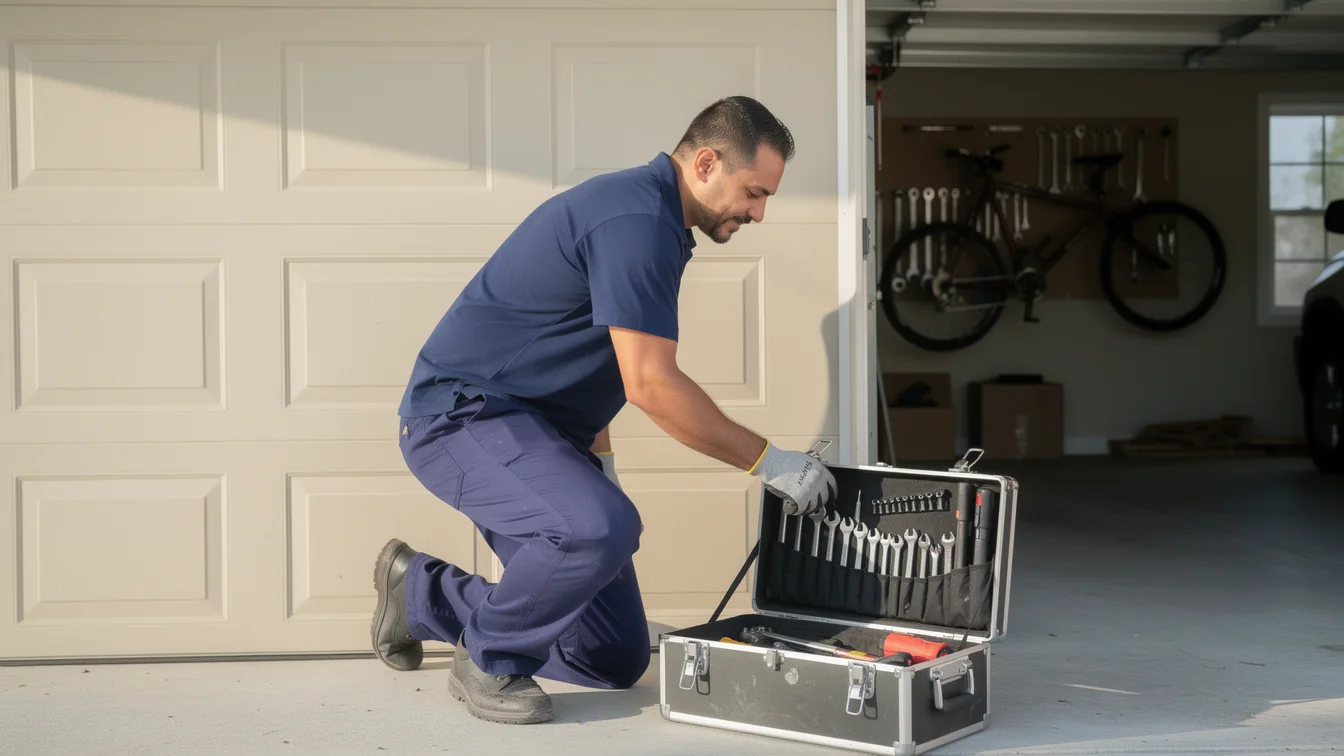 What We Actually Do When We Show Up for a Service Call
A straight look at what our techs check on a Brick service call, built around homes from 1938-2005 and the coastal-cold swings that wear doors out fast here.
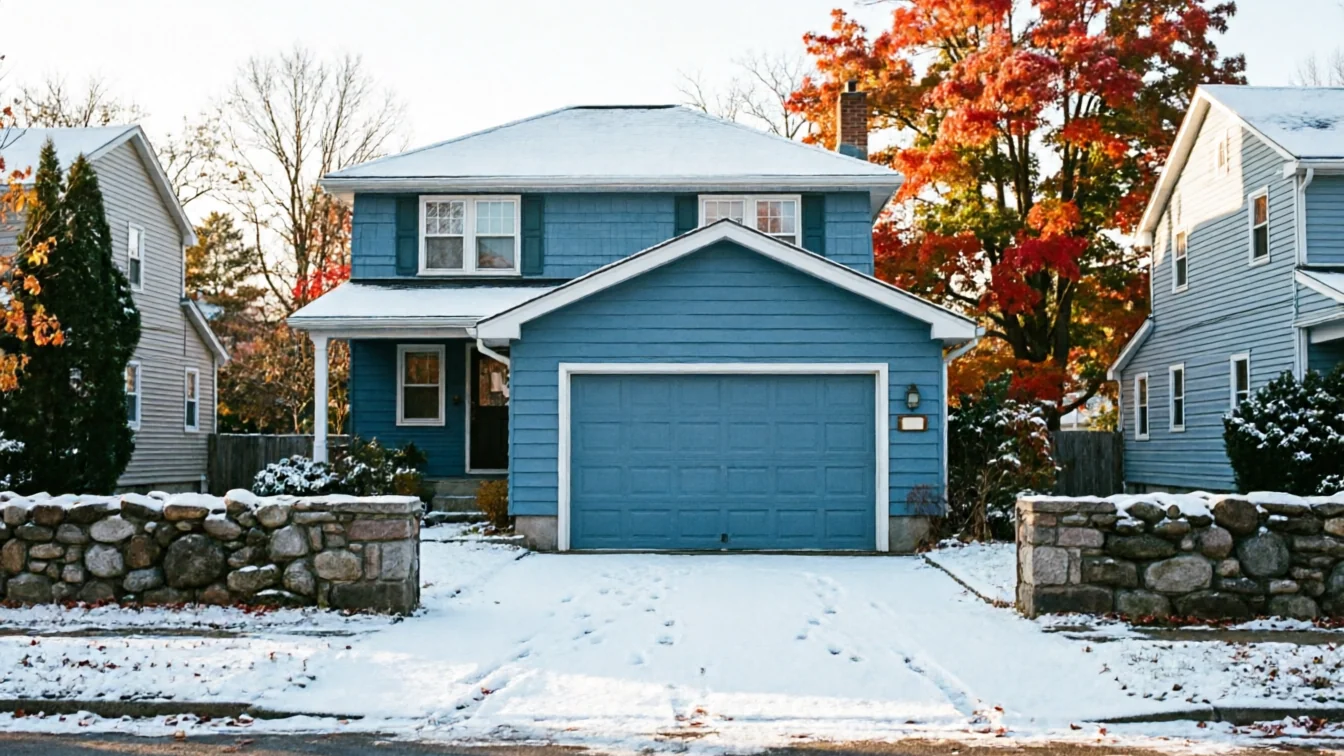 When a Spring Goes in Cold Weather in Brick
Brick homes built mostly in the 1960s and 70s carry torsion springs now past their rated cycles.
Ready when you are
Need a garage door sorted in Brick?
Brick Garage Door Pros repairs and installs garage doors, springs and openers in Brick, NJ and the surrounding area.