
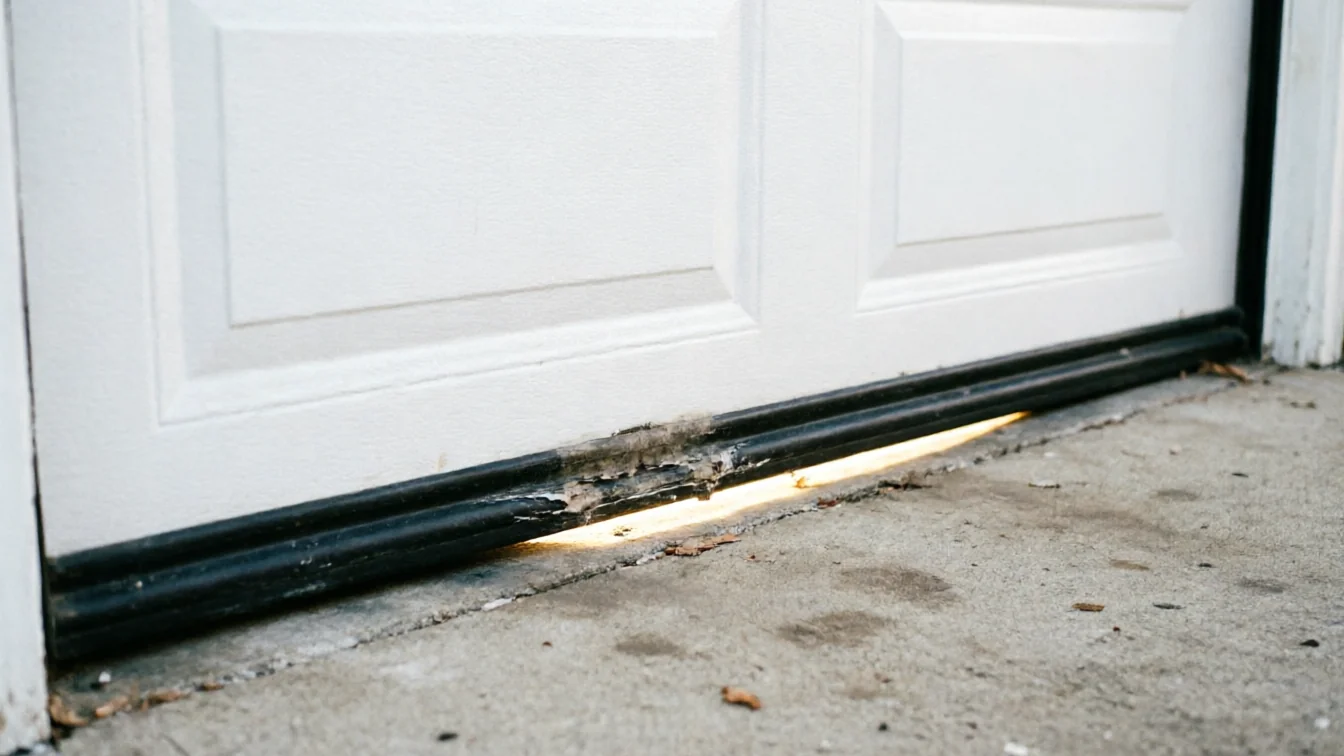
 Weather Seals and Draughts in Brick Garage Doors
Brick's housing stock dates mostly to the 1960s and 70s, and the cold-climate band here means worn weather seals turn into real drafts.
What That Noise From Your Garage Door Is Actually Telling You
Brick homeowners with 1960s-70s houses hear specific noises from cold-weather hardware fatigue. Here's what each sound means and when it's a call, not a DIY fix.
Local detail
What Is Going On
Most of the houses on this side of Ocean County went up between 1938 and 2005, with the bulk of the stock dating to the 1960s and 70s. That matters because garage door hardware has a service life, and a door installed when a Brick ranch or split-level was first built is now old enough that springs, rollers, and bearings are past the point of quiet operation. A torsion spring rated for roughly 10,000 cycles does maybe 2-4 cycles a day in an average household - do the math on a house built in 1968 and you land right in the window where original hardware is failing or already replaced once.
The noise you hear is the hardware telling you where it's worn. A grinding sound usually means metal-on-metal contact in a roller or bearing that's lost its lubrication or worn through a bushing. A loud bang partway through a cycle is almost always a spring losing tension or, worse, a cable jumping its drum. A rhythmic thump that repeats once per revolution of the drum points to a flat spot on a roller or a bent track section. None of these get quieter on their own. They get worse, usually in cold weather, because contracted metal has less give in it when something's already out of alignment.
The area
When to Get Help
Brick sits in a cold-climate zone with real seasonal temperature swings, and cold metal is less forgiving metal. A spring or cable that's marginal in September can snap in January when the steel contracts and the door takes more force to move. If you hear a sudden loud bang and the door won't open, or opens only partway and stops, that's a broken spring or a cable off the drum - stop using the opener and call. Trying to force it with the opener motor when a spring is gone can bend the track or burn out the motor.
If the noise is a steady grinding or squealing that's been building for weeks, you have time to get someone out, but don't wait through a whole winter on it - the same cold that makes failures worse also makes diagnosis easier to put off indefinitely. If a door this old (built in the 1960s or 70s era that defines most of this area) is making grinding noises AND showing visible rust or pitting on the spring coils, that's a replacement conversation, not a lubrication job. We won't tell you to replace a door that just needs an adjustment, but we also won't lubricate a spring that's about to let go.
What we find
Checking It Yourself
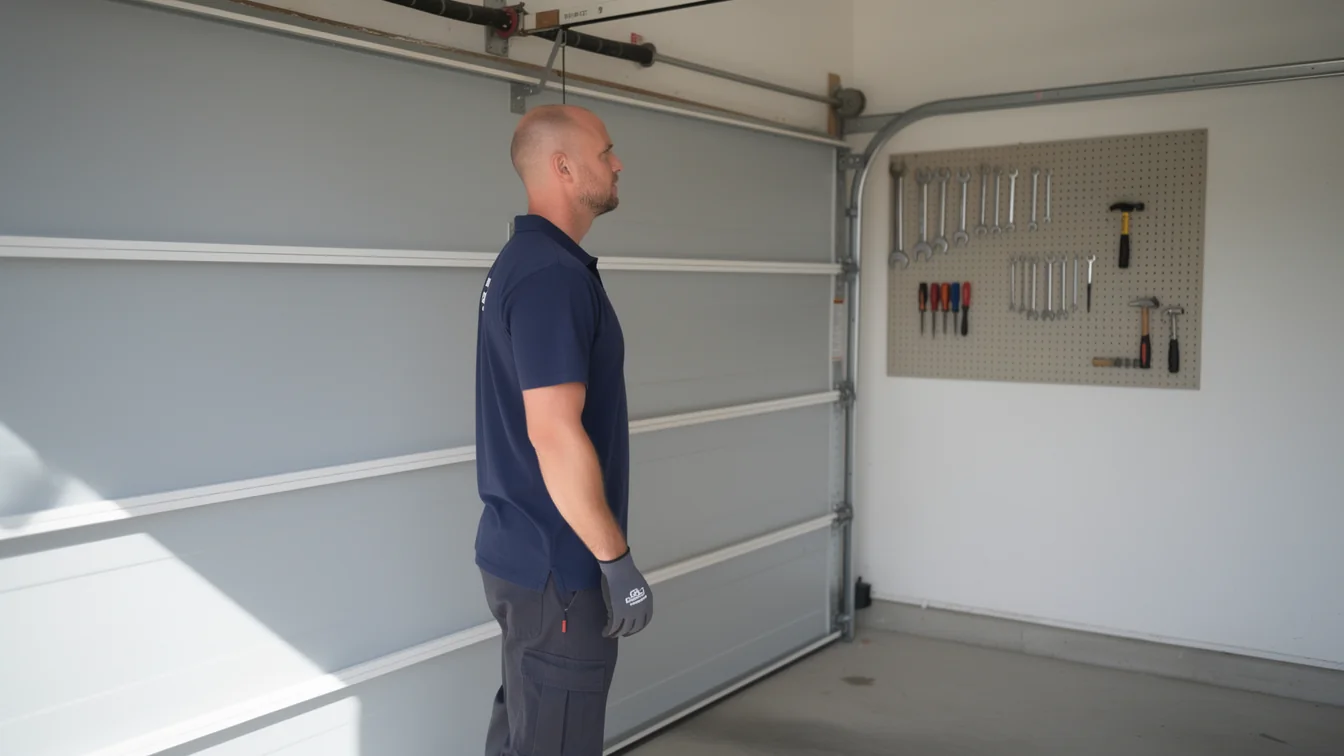
Before you call anyone, there's a few things worth a look. Open the door manually (disconnect the opener first) and see if it moves smoothly by hand or binds somewhere - binding under hand power with the opener disconnected points to a track or roller problem, not the opener itself. Look at the springs: if one is visibly stretched further than the other or has a gap in the coils, that's your bang noise, and it's not a DIY repair - torsion springs under tension are a genuine hazard.
Check the rollers where they ride in the track. On a house with original or near-original hardware from the 1960s-70s building wave common across this area, steel rollers with no nylon bushing are a common grinding source - they're also inexpensive to swap compared to a full hardware replacement. Listen for where in the cycle the noise happens: start, middle, or end of the door's travel. That location tells a tech more than a description of the sound ever will, so if you do call, have that detail ready.
How we work
What Local Conditions Do
Brick's climate band is classified cold and severe, which means real freeze-thaw cycling on anything metal mounted outside a heated space - and a garage, even an attached one, usually isn't heated. Steel springs and tracks contract in cold, which tightens tolerances that were already loose from decades of cycling. That's why noise complaints here cluster in the cold months even when the hardware has been slowly wearing all year.
Across the broader service area there are roughly 137,000 households and about 82,000 owner-occupied houses, and a lot of them share the same housing-era profile - original hardware from a build date decades back, now meeting a climate that's hard on metal. That combination is specific to areas like this one, not a generic nationwide maintenance problem. If your opener and door came with the house and you don't know their age, assume they're original to a mid-century build and treat any new noise as information, not background noise to ignore.
Questions
Common questions
Why does my garage door make more noise in the winter?
Cold contracts metal, and a door with worn rollers or a spring that's already lost some tension has less margin when the steel tightens up. Brick's climate band runs cold and severe, so that seasonal swing is real here, and it's usually when marginal hardware finally announces itself with a bang or a grind instead of staying quiet.
Is a grinding noise always the opener?
No. Disconnect the opener and move the door by hand - if it still grinds or binds, the problem is in the rollers, track, or bearings, not the motor. A lot of 1960s-70s era doors in this area still have original steel rollers, which are a common source of that sound.
How old does a garage door have to be before noise means replace, not repair?
There's no fixed age, but housing in this area was mostly built between the 1930s and 2000s with a concentration in the 1960s-70s. A door that old, with rusted spring coils or a bent track along with the noise, is usually a replacement case. Noise alone, without those signs, is often a repair.
Can I lubricate a noisy spring myself?
You can lubricate rollers and hinges yourself with the door disconnected and resting on the floor. We'd stop short of touching the springs themselves - a torsion spring under tension is dangerous to work on without the right bars, and that's one job we tell homeowners to leave to a call.
Recommendation
You Might Also Like
More garage door guides for Brick homeowners.
Weather Seals and Draughts in Brick Garage Doors
Brick's housing stock dates mostly to the 1960s and 70s, and the cold-climate band here means worn weather seals turn into real drafts.
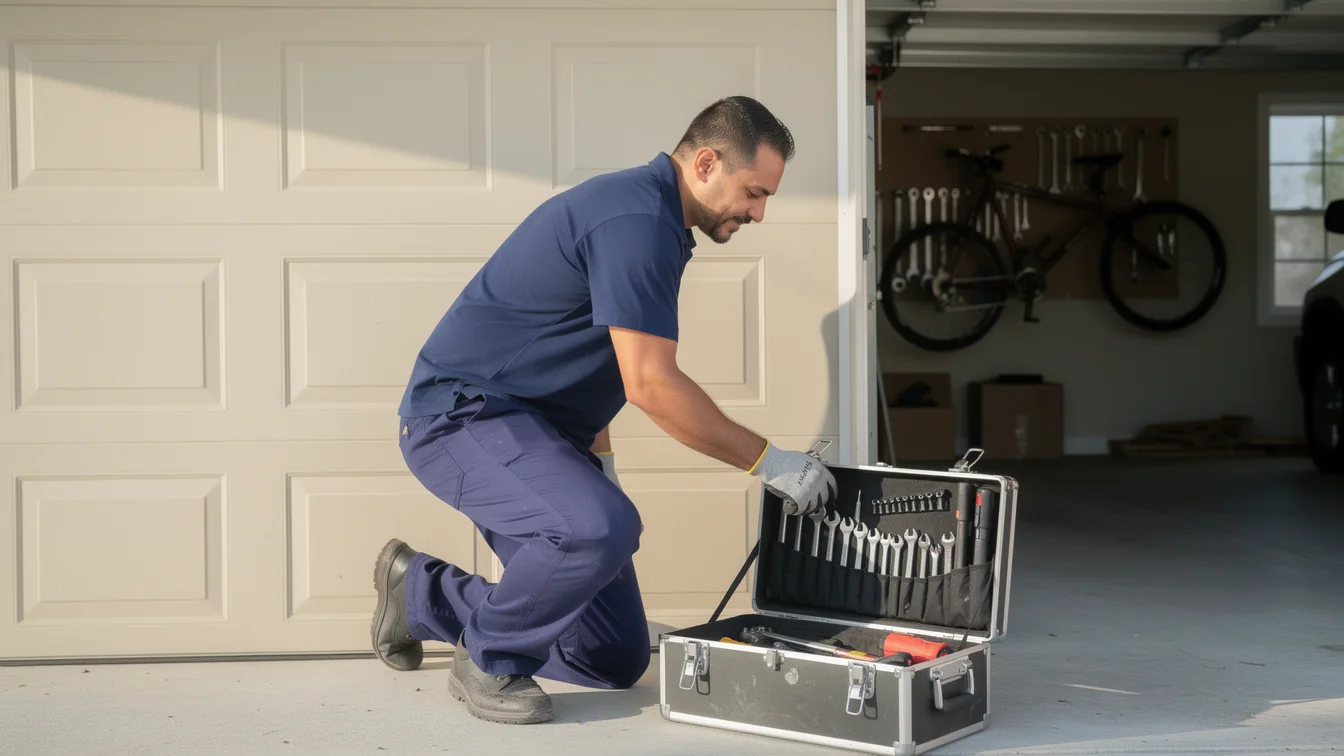 What We Actually Do When We Show Up for a Service Call
A straight look at what our techs check on a Brick service call, built around homes from 1938-2005 and the coastal-cold swings that wear doors out fast here.
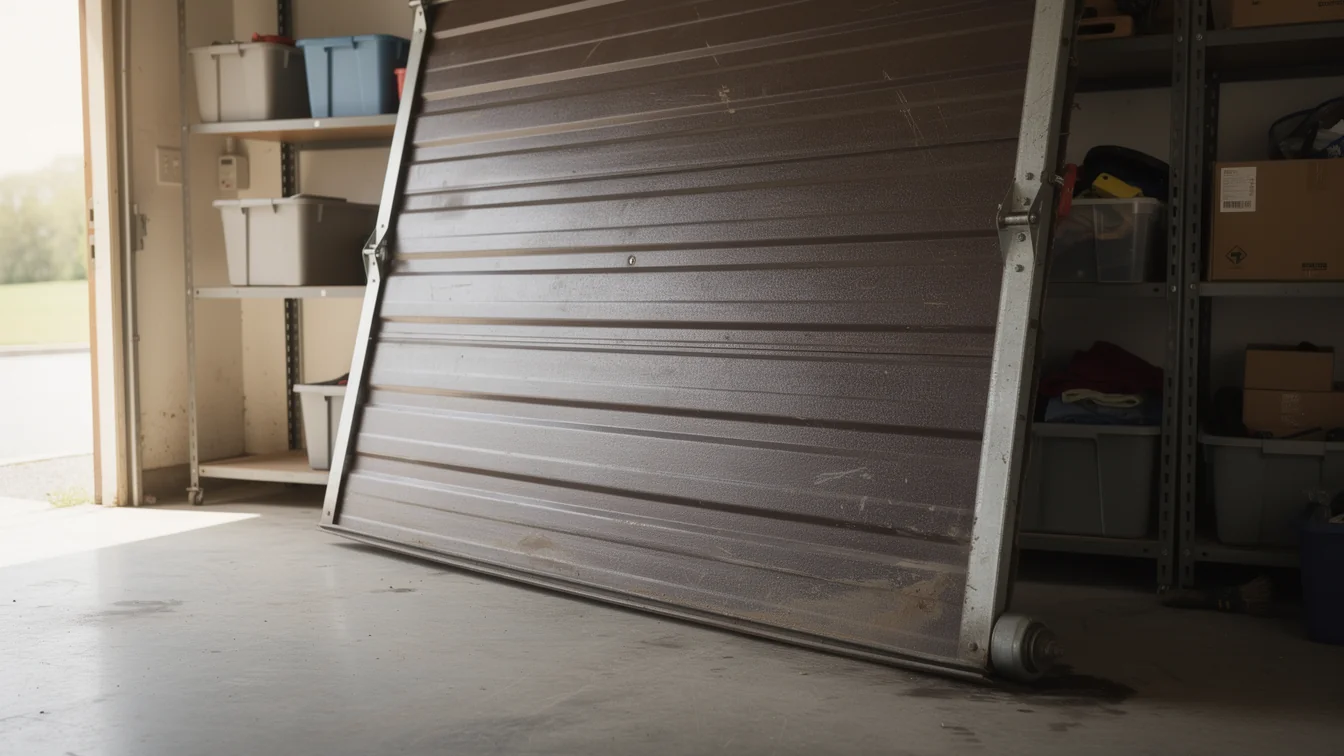 Off-Track Doors: What's Really Happening in Brick Homes
Brick homes built between 1938 and 2005 carry original track hardware that wasn't made for decades of coastal cold.
Ready when you are
Need a garage door sorted in Brick?
Brick Garage Door Pros repairs and installs garage doors, springs and openers in Brick, NJ and the surrounding area.