 Off-Track Doors: What's Really Happening in Brick Homes
Brick homes built between 1938 and 2005 carry original track hardware that wasn't made for decades of coastal cold.
When a Spring Goes in Cold Weather in Brick
Brick homes built mostly in the 1960s and 70s carry torsion springs now past their rated cycles. Here's what a cold-weather break looks like and what to do next.
Local detail
What Is Going On
Steel contracts in the cold. A torsion spring that's been winding and unwinding for decades gets a little more brittle every winter, and the metal loses some flex right when the temperature drops hardest. In Brick, most of the housing stock went up between 1938 and 2005, with the median build year around 1968 and the bulk of it dating from the 1960s and 70s across the fifty or so named sections of town. That means a lot of original or first-replacement torsion springs are now fifty-plus years into a part that was never meant to last that long.
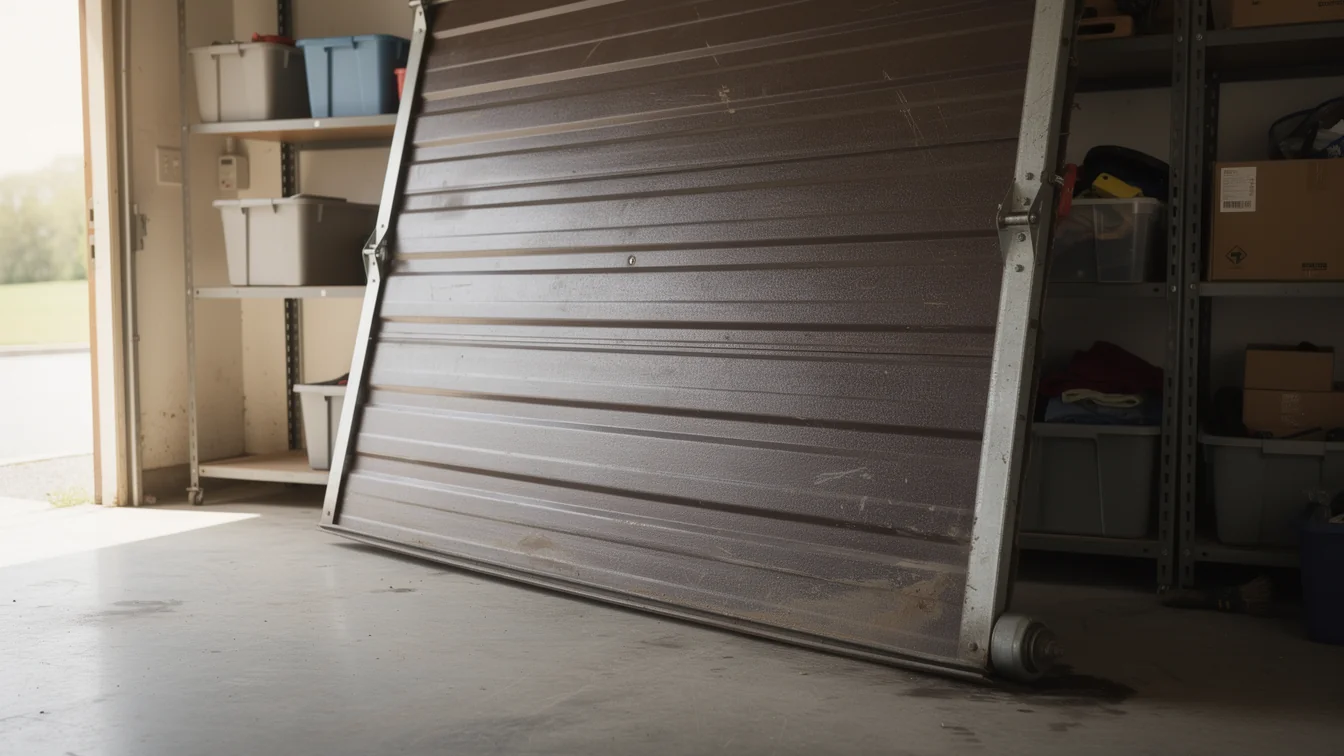
The break itself is usually loud - a bang that sounds like a car backfiring in the garage. The door won't move, or it slams down hard if it was open when the spring let go. This isn't a slow leak kind of failure. It's sudden, and it tends to happen on the coldest mornings of the year because that's when the metal is least forgiving and when the door gets used first thing, cold and stiff, before anything's had a chance to loosen up.
Brick sits in a climate band the federal data classes as cold and severe, which is the other half of this. It's not just old springs - it's old springs being asked to do their worst work on the days the metal likes it least.
The area
When to Get Help
If you heard the bang and the door won't open by remote or by the wall button, stop trying. A broken torsion spring means the door has no counterbalance left, and the opener will strain against full deadweight - that can burn out the opener motor or snap a cable next. Don't pull the emergency release and try to lift it by hand either, especially on a double door. Without the spring doing its job, a standard double door can weigh well over a hundred pounds, and on an icy garage floor that's not a one-person job, or really anyone's job without the right bar and clamps.
Call for help the same day if the garage is your only way into the house, or if you've got a car trapped inside and you need it for work or school runs. A spring job on a torsion setup from the 1960s-70s housing stock common here can sometimes mean non-standard drum sizes or shaft lengths, so don't be surprised if the first visit is partly about figuring out what's actually on your header before the second visit does the swap.
If the door is making noise but still moves, that's a different call - less urgent, but worth getting looked at before it becomes the 6 a.m. bang.
What we find
Checking It Yourself
You can look without touching anything dangerous. Open the garage door (by hand, slowly, only if it's currently working) and look straight up at the horizontal shaft above the door, close to the header. A torsion spring is the tightly wound coil on that shaft - on most double doors in Brick's older housing stock there's one in the center, on newer setups there are two. A snapped spring shows a visible gap in the coil, sometimes with the two ends twisted apart at an odd angle.
From the floor, check the cables on each side of the door. They should run straight and taut from the bottom bracket up to the drum at the top. If one side looks slack or frayed while the other is tight, the spring on that side has likely gone, even if the coil gap is hard to see from below.
Don't touch the spring, the winding cones, or try to re-tension anything. These are under enough stored force to cause real injury, and that's true whether the house was built in 1968 or last year. Your job here is just to confirm what you're dealing with before you call, not to fix it.
How we work
What Local Conditions Do
Two things stack on top of each other here. First is age: with a median build year around 1968 and most houses dating to the 1960s and 70s, a large share of torsion springs in Brick are well past any reasonable service life, original hardware that's been through forty or fifty New Jersey winters. Second is the cold itself - Brick falls in a climate band rated cold and severe, which means the metal fatigue that's been building for decades gets its hardest test on the coldest mornings, not the mild ones.
That combination is why spring failures here cluster in winter rather than spreading evenly across the year. It's also why a spring that held up fine through October can fail in January without any new damage or misuse - it's the same slow wear finally meeting the one condition that pushes it over.
We don't replace a spring with a universal one-size part. Torsion hardware on homes from this era varies enough in shaft and drum sizing that getting the wrong spring just means a weaker fix that fails again sooner.
Questions
Common questions
Why did my spring break overnight with no warning?
Torsion springs fatigue gradually from thousands of open-close cycles, and that fatigue is invisible from the outside. Cold weather is often the final push - the metal is stiffer and less forgiving right when the spring is already near the end of its life. There's rarely a warning sign the week before; the coil just reaches its limit.
Is it more expensive to fix a spring in winter?
We don't have pricing figures to quote here, but what we can say is that a broken spring doesn't get cheaper by waiting - a door left unbalanced can strain the opener or snap a cable, turning one repair into two.
Can I just use the garage door with one spring broken on a double door?
Not safely for long. With one spring gone, the opener is lifting most of the door's weight alone, which overworks the motor and puts uneven strain on the remaining spring and the cables. It may still open for a few cycles, but you're pushing toward a second failure.
Are older torsion springs in Brick different from what's sold today?
Often, yes. Homes built in the 1960s and 70s frequently have torsion shafts and drums sized differently than current standard hardware, so a repair sometimes needs a spring matched to the original setup rather than a generic replacement off the shelf.
Recommendation
You Might Also Like
More garage door guides for Brick homeowners.
Off-Track Doors: What's Really Happening in Brick Homes
Brick homes built between 1938 and 2005 carry original track hardware that wasn't made for decades of coastal cold.
 What Brick's Older Housing Stock Means for Your Garage Door
Most Brick, NJ garage doors date to homes built 1938-2005, many with no insulation for this area's severe cold winters.
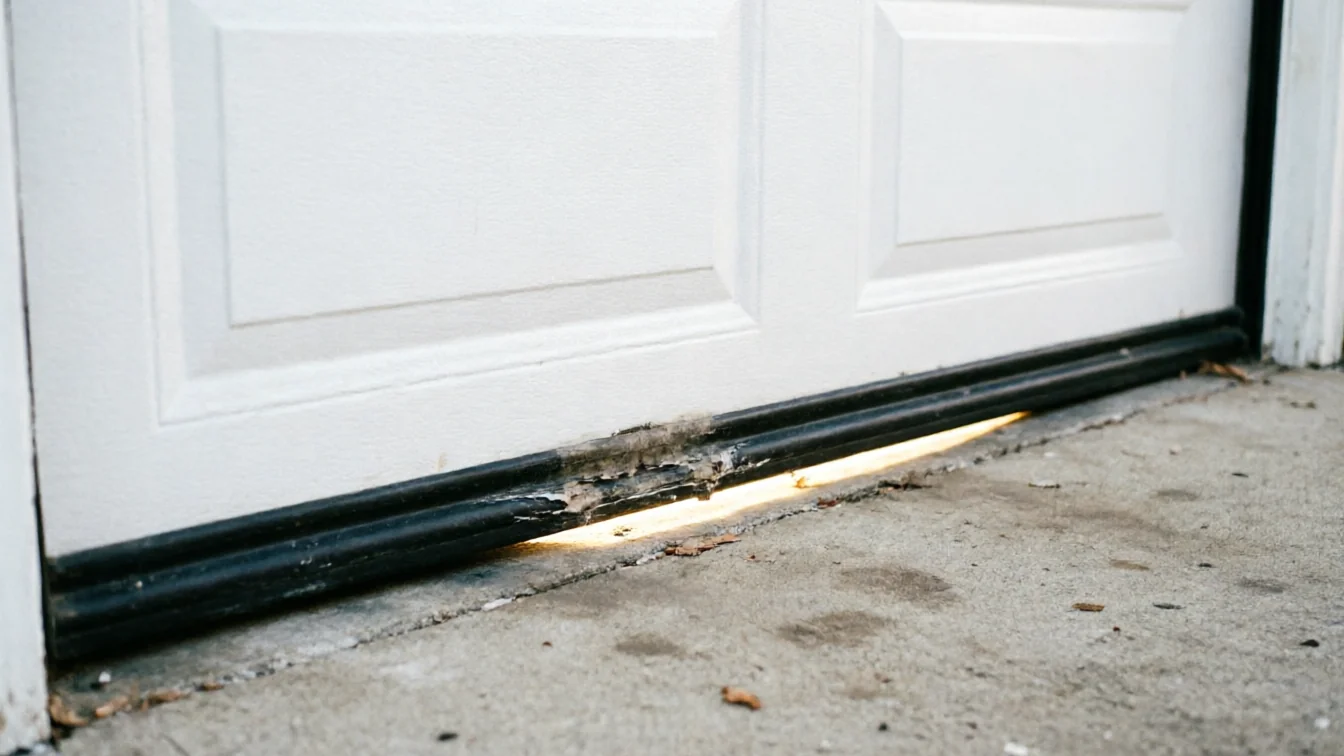 Weather Seals and Draughts in Brick Garage Doors
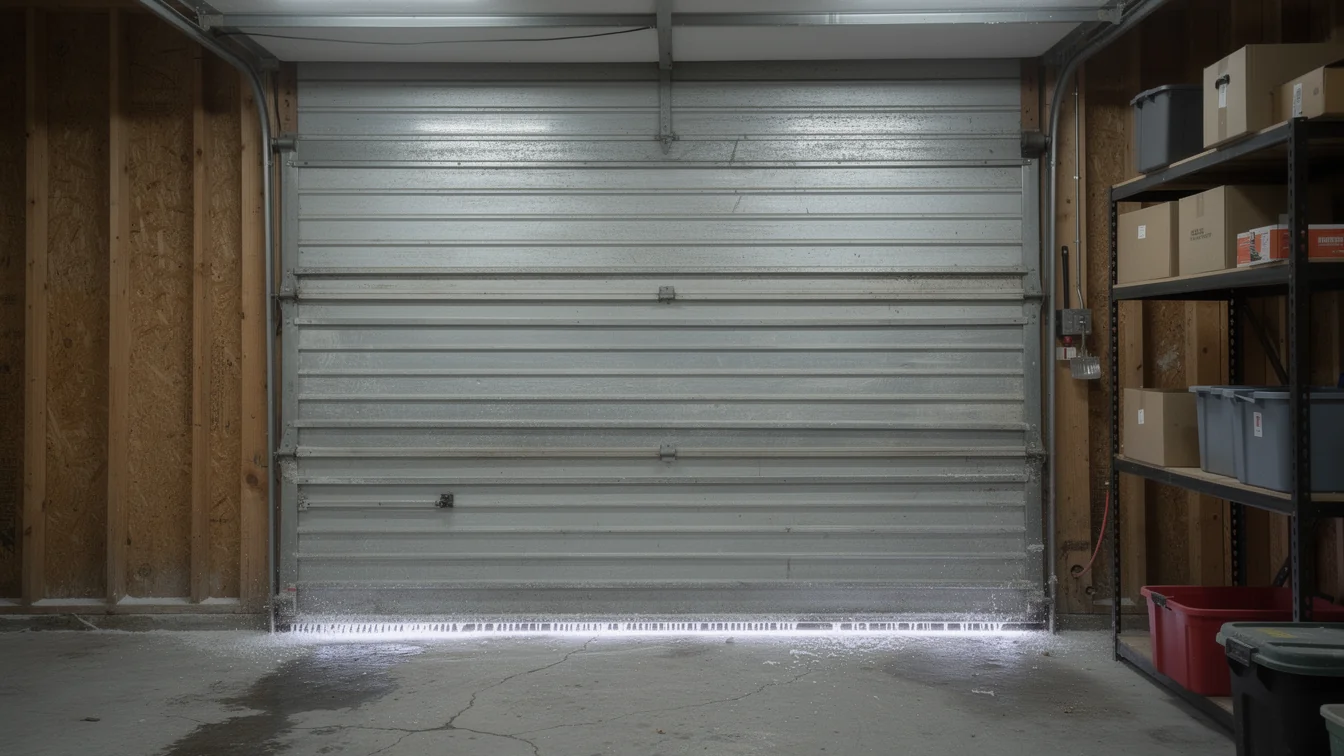
Brick's housing stock dates mostly to the 1960s and 70s, and the cold-climate band here means worn weather seals turn into real drafts.
Ready when you are
Need a garage door sorted in Brick?
Brick Garage Door Pros repairs and installs garage doors, springs and openers in Brick, NJ and the surrounding area.