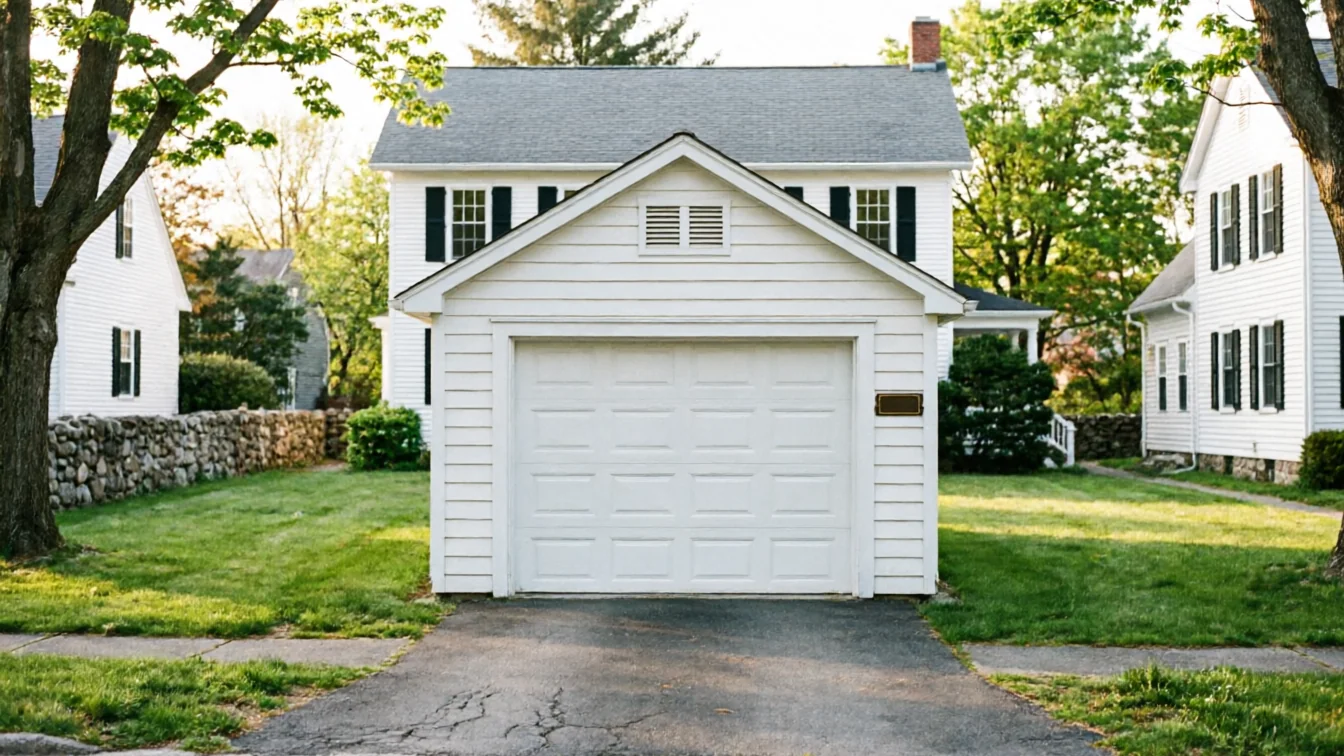
 Attached vs Detached Garage Doors: What Brick Homeowners Deal With
How Brick's 1938-2005 housing stock and cold-severe climate change what goes wrong with attached and detached garage doors, and what to check before you call.
When Your Opener Dies in a Power Cut, Brick NJ Edition
Why Brick's older housing stock and severe cold make openers quit during power cuts, what to check yourself, and when the manual release isn't enough.
Local detail
What Is Going On
Most of the houses on this stretch of Brick went up between 1938 and 2005, with the typical build year sitting around 1968, long before battery-backup openers were standard equipment. That means the opener in your garage is often running off wiring and a circuit that was never designed to carry a modern unit, let alone one with a backup battery trying to charge off it.
When the power cuts, a newer opener with a working battery will usually limp through a door cycle or two. An older one just stops, full stop, mid-track if you're unlucky. The door itself doesn't know the power is out. It's the motor and the logic board that go dark, and on a door that's been fighting a weak spring or a bent track for years, that's often the moment something finally gives.
The other half of this is the grid itself. Brick's cold is classified as severe, and severe cold is exactly the kind of weather that knocks lines down and asks opener batteries to work harder than they're rated for, right when you need the door to open for the plow truck or close against the wind.
The area
When to Get Help
Call before you force anything. If the opener has no power and the door won't budge even after you've pulled the manual release cord, something mechanical is binding, not just electrical, and pulling harder on a stuck door usually bends the track or snaps a cable.
If your garage is in one of the 1960s or 70s-built sections that make up most of this area's older neighborhoods, the breaker feeding your opener is probably original to the house. A dead opener that won't even hum when power is restored is worth a call before you assume it's just the storm.
We're straight about this: if the opener is original to a house built in the 1960s, replacing it is usually the better call over another repair. Parts for motors that old are getting hard to source, and a new unit with a real battery backup solves the power-cut problem for good instead of patching it once.
What we find
Checking It Yourself
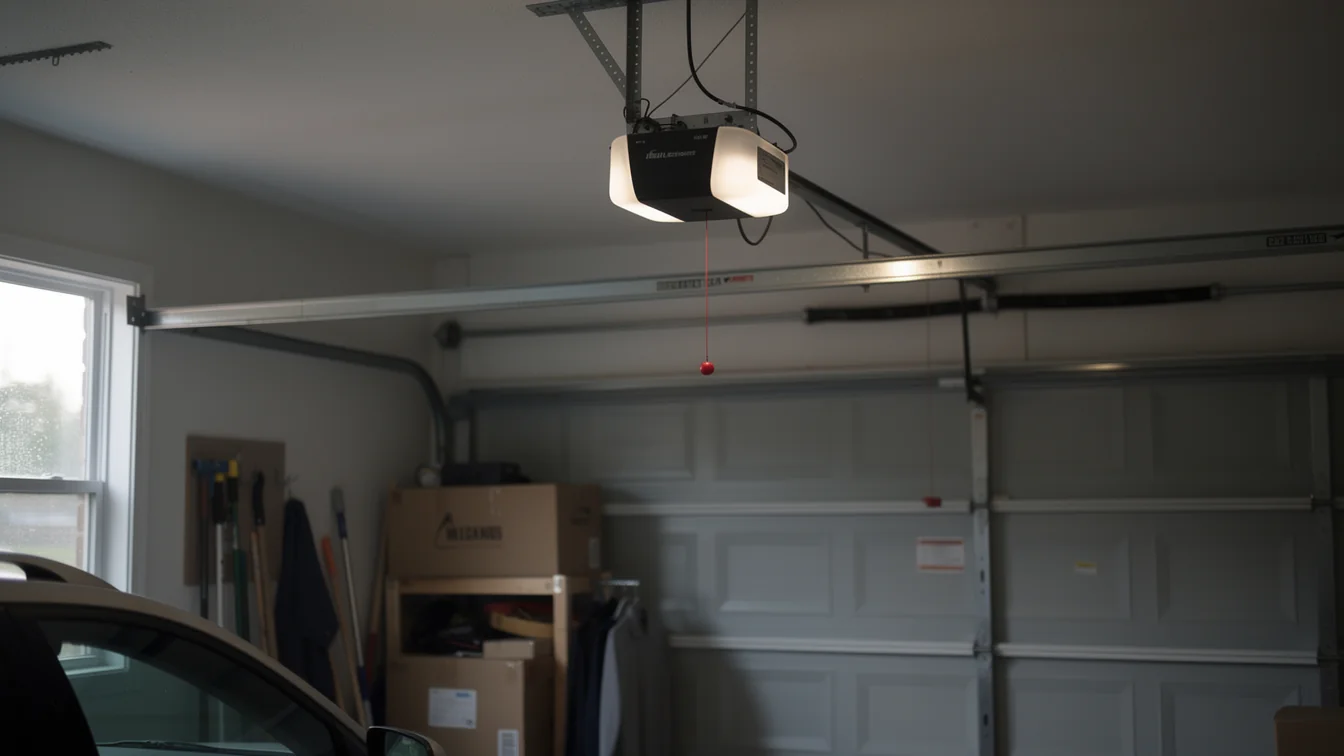
Before you call anyone, a few things take five minutes. Find the manual release, the red cord hanging from the trolley, and pull it straight down. That disconnects the opener so you can lift the door by hand. If it lifts smoothly, your opener is the problem, not the door.
With 81,821 owner-occupied houses across this service area, a lot of garages still have that original pull-cord release from a decades-old opener, and plenty of owners have never touched it until the power goes out. Test it once when the power is on, not for the first time during an outage.
Check the outlet the opener plugs into, separate from the wall switch. Reset the breaker if it's tripped. If the opener has a battery backup, listen for it: most chirp or show a light when the main power drops. No chirp usually means a dead battery, which is a cheap fix on its own and worth doing before the next cold snap.
How we work
What Local Conditions Do
Two things compound here. The housing stock is old enough that a good share of openers predate battery backups entirely, and the climate is cold enough, severe by the federal classification, that the power cuts those backups are meant to cover happen more than owners expect. Put those together and you get a lot of Brick garages where a storm means a stuck door, not an inconvenience.
It's not just here. Towns like Point Pleasant Beach and Manasquan a few miles east see the same grid strain during winter weather that knocks out openers in Brick, and Leisure Village East and Leisure Village a couple miles over sit in the same older housing bracket. If you're in one of those areas and your opener is original, the fix is usually the same: a backup battery or a newer unit, not another round of patching the old one.
Questions
Common questions
Why does my garage door opener stop working the moment the power goes out?
Most openers in Brick houses built decades ago don't have a battery backup, so they're fully dependent on grid power. When it cuts, the motor and logic board go dark immediately, even though the door and springs are fine. A newer opener with a charged backup battery will usually still cycle a few times.
Can I open my garage door by hand during a power cut?
Yes, as long as the manual release cord, the red pull hanging from the trolley, is working and the door isn't binding on a bent track or bad spring. Pull it down to disconnect the opener, then lift the door by hand. If it won't lift smoothly, that's a mechanical issue, not just a power one.
Is it worth adding a battery backup to an old opener?
Sometimes, but if the opener is original to a house built in the 1960s or earlier, we usually recommend replacing the whole unit instead. Parts for motors that old are hard to find, and a new opener with backup built in solves the power-cut problem instead of adding one more part to an aging system.
Recommendation
You Might Also Like
More garage door guides for Brick homeowners.
Attached vs Detached Garage Doors: What Brick Homeowners Deal With
How Brick's 1938-2005 housing stock and cold-severe climate change what goes wrong with attached and detached garage doors, and what to check before you call.
 What Brick's Older Housing Stock Means for Your Garage Door
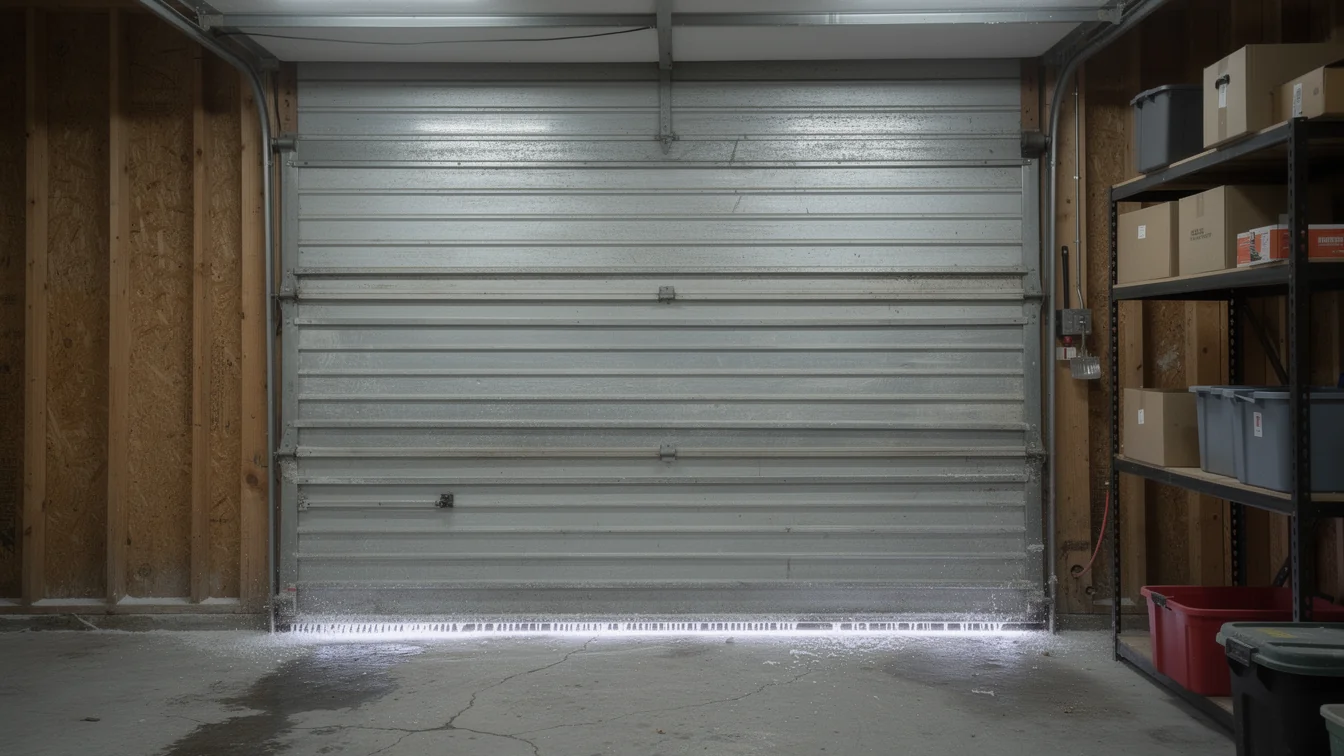
Most Brick, NJ garage doors date to homes built 1938-2005, many with no insulation for this area's severe cold winters.
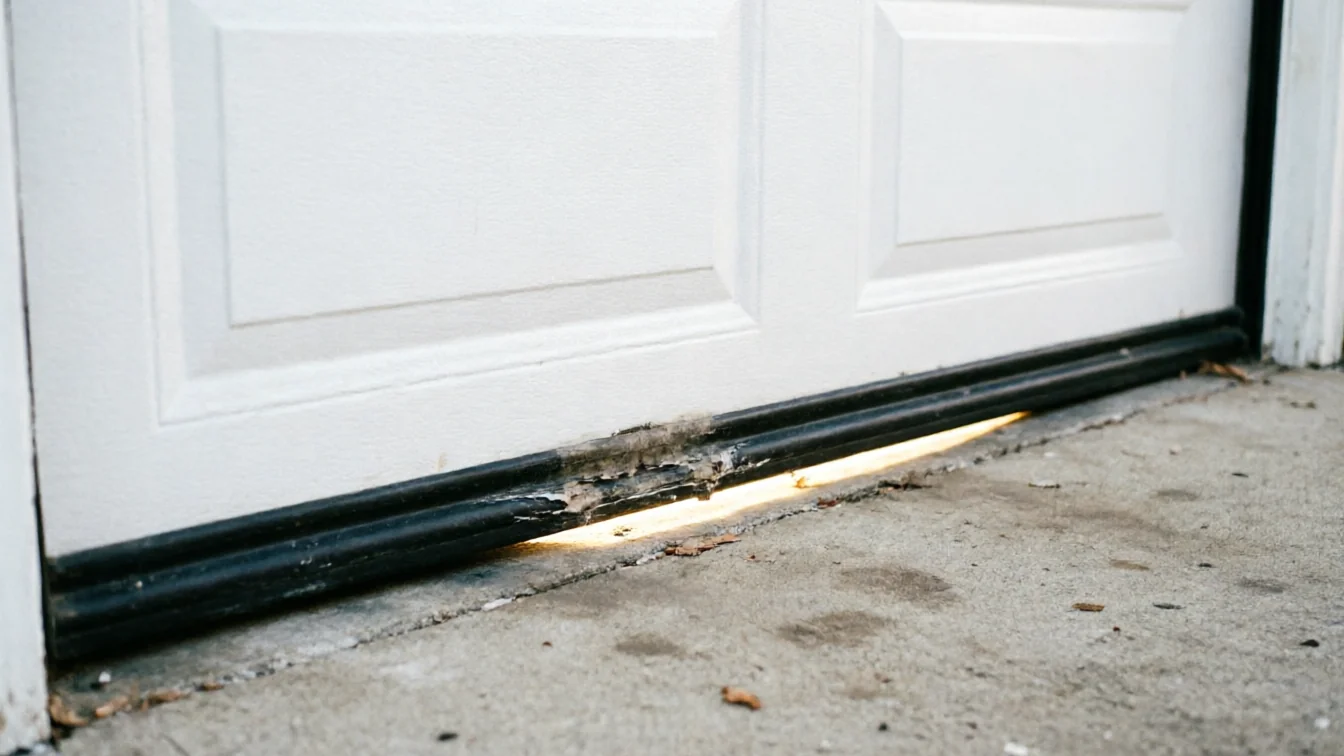 Weather Seals and Draughts in Brick Garage Doors
Brick's housing stock dates mostly to the 1960s and 70s, and the cold-climate band here means worn weather seals turn into real drafts.
Ready when you are
Need a garage door sorted in Brick?
Brick Garage Door Pros repairs and installs garage doors, springs and openers in Brick, NJ and the surrounding area.